


'Little Joe' Joe Pye Weed (Eutrochium)
Perennial
- Fuzzy lavender mauve flowers sit atop dark stems.
- Joe Pye weed that is suited for smaller gardens or containers!
- Top-rated by the Chicago Botanic Garden.
- Deer & disease-resistant native perennial.
- Zones 5-9, sun, 4-5' tall x 1-3' wide at maturity.
 ZONE
 EXPOSURE
 HEIGHT


Description
Named after a Native American medicine man and Mohican sachem named Joseph Shauquethqueat, Joe Pye weed (Eutrochium) is a popular native perennial that grows naturally along wet prairies or roadsides, with large, foamy pink flowers that stand tall on distinct dark stems. Its large habit adds vertical interest to mixed garden beds or makes for a great native plant for massing along borders. Plus, it’s deer- and rabbit-resistant, low-maintenance overall, and a host plant to several species of butterfly and moth caterpillars. Pair with milkweed (Asclepias) and watch as your pollinator garden becomes a haven for local butterflies!
Details
Common name: Joe Pye weed
Zone: 5-9
Sun exposure: Sun (> 6 hours sun) to part sun (4-6 hours sun).
Height x width: 4-5' tall x 1-3' wide
Flower color: Pink
Foliage color: Green
Season of interest: Summer to fall
Bloom time: Midsummer-early fall
Features: Native, rabbit-resistant, deer-resistant, best for beginners, low-maintenance, pollinator-friendly, container-friendly, heat-tolerant, cold-tolerant, rain gardens, fragrant, cut flower
Uses: Accent, border, cottage gardening, erosion control or embankment, ground cover, pollinator garden, massing, naturalizing, slopes, specimen
How to Grow
Light: Sun (> 6 hours sun) to part sun (4-6 hours sun).
Water: Average water needs.
Spacing: Minimum 2 ft. apart
Fertilizing: It doesn't need consistent fertilizing. You can do a very light application the first summer after planting.
Winterizing: No special winter care is necessary.
Maintenance & pruning: No pruning is necessary, except to cut back dead stems. You may also prune back midsummer if plants get too tall or to prevent flopping to your personal preference.
Plant spacing is based on the ultimate width of the plants. This figure is normally given as a range; for example, 3-5’. If you live in a cold climate and/or want plants to fill in more quickly, plan to space at the shorter end of the range. If you live in a warm climate, are on a limited budget, or are willing to wait longer for plants to touch, use the higher end of the range. Using the larger number is recommended when calculating distance from a building or structure. There’s really no such thing as "maximum spacing": if you don’t want your plants to touch, you can space them as far apart as you’d like. All plant spacing is calculated on center, or in other words, the centers of the plants are spaced one half of their eventual width apart:

Unless you are planting in a straight line, as you might for hedges or edging, space your plants in a staggered or zig-zag pattern for a more interesting and naturalistic look:

Not sure just how many plants will fit in your garden? Our calculator gives you the exact amount of plants required for your space. Simply update the values and the calculator will re-calculate accordingly. Spacing information can be found in the 'How to Grow' tab on each plant's page.
My 3 Joe Pye Weed plants arrived today. Inside the plastic wrap the plants were near death - wilted with some dead leaves falling off. I won’t be ordering again from this company again.
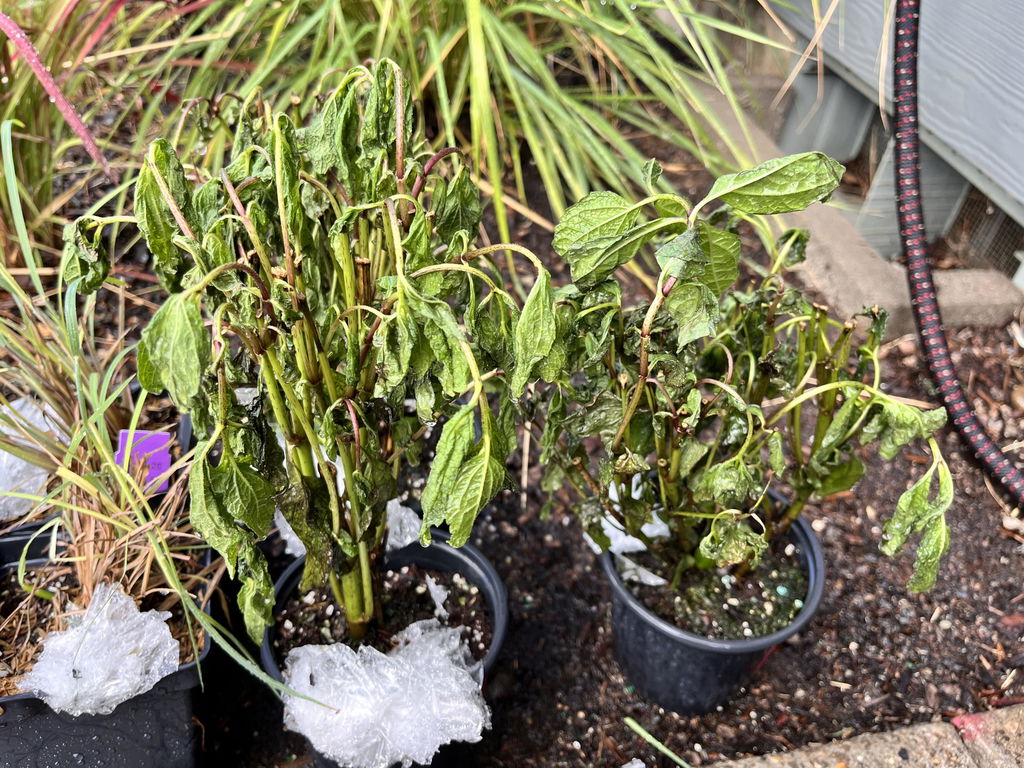
Hello! We’re sorry that you received plants that are not up to our standards. We try our best to provide excellent plants, but some factors, like shipping and handling, are outside our control. That’s why we have a 60-day guarantee on all of our orders. Please email your order number and pictures of your plants to [email protected] to start the claims process. We look forward to helping! https://bit.ly/ggp-guarantee
Arrived promptly and nicely packaged. Planted them quickly with some added compost and watered. Then we had a hefty rainfall, and more coming this weekend. So far so good. They look healthy and happy. Just crossing fingers for winter survival.
A gift and she loved them!
It is growing but has not let bloomed. Hoping for the best.
Two of the three plants are doing well. The third appears to be dead. They were planted at the same time in the same conditions, but although two are putting on green growth, the third hasn’t any. Is there any recourse for this?
Thanks,
Mike Miller
Our friendly customer service team is here to help! After further investigation, we will be able to better assist you. Our fall guarantee covers plants received after September 1 until May 2026, so please contact [email protected] with your order number and photos of the plants to begin the claims process if necessary.
Arrived in good condition it has doubled in size since I planted it doing great
My sister wanted this for her butterfly garden in FL. We went on the search. And this nursery delivered great price and plant condition!
One looks great, the other is completely dried up and dying. Not sure what happened!
We're sorry you're having trouble with your plants. Our team of horticulture experts would love to take a closer look! Please contact us at [email protected] with your order number and photos of the plants so we can better assist you. All orders are covered by our 60-day guarantee. We look forward to helping!https://bit.ly/bb-guaranteed
The plants were well packed, but they haven't grown enough to produce any flowers yet.
The plants are healthy and look great!
Healthy and growing good.
It died. I typically have a green thumb but this one gave it up for no apparent reason.
Hello! We're sorry to hear you've had trouble with your new plant. Rest assured, we have a 60-day guarantee on all our plants. If you received your plants within that timeframe, we would be happy to apply your warranty once we receive the pictures. Please email pictures of the plants to [email protected]. Happy Gardening!
The replacement plants were fine. Customer service was excellent.
I ordered two 'Little Joe' plants on 07/03/22 and received them quickly. They were a bit stressed due to the heat wave. After recovering in a cool indoor room I planted them in a planter. It is now 08/05/22, they have more than doubled in size and are covered with tiny buds. I except them to start blooming in the next few days.
Plants are coming up heathy and stating to bud.
The plants arrived looking very healthy! I was very impressed with the shipping container that they arrived in, keeping all of the plants protected. They went in the ground immediately and they are doing very well. I would definitely buy again from this company.
Plants arrived very healthy, wasn't expecting them to do much this year, boy was I wrong, they are budding and will be blooming in the next few weeks! They have tripled in size as well! Can't wait for fall to order more!
The plants arrived healthy, but haven't grown any.
Hello! Thank you for your feedback. Many factors like weather, soil type, watering, and fertilizing all play a role in the growth of your plant. Perhaps you're familiar with the old saying about plants: first year sleep, second year creep, third year leap. This applies to plants in the garden center as well as plants you purchase online. They generally spend their first year growing roots in their new home, the second year they have more energy to put into growth, and the third year, they are growing and flowering vigorously. With proper care, you will see growth. Happy Gardening!
Is it invasive
'Little Joe' Joe Pye Weed is a native and, as a result, may self-seed in the landscape given the right conditions.