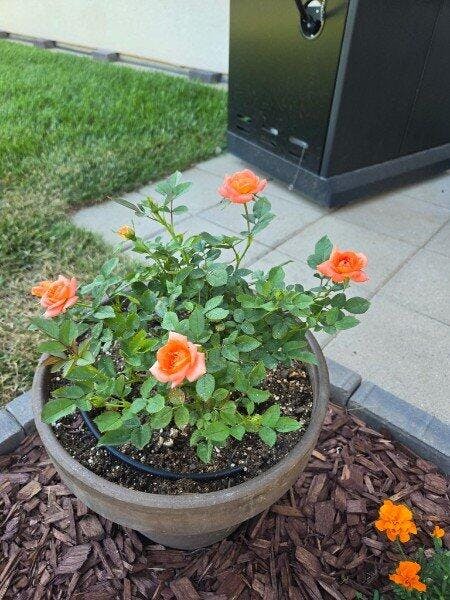
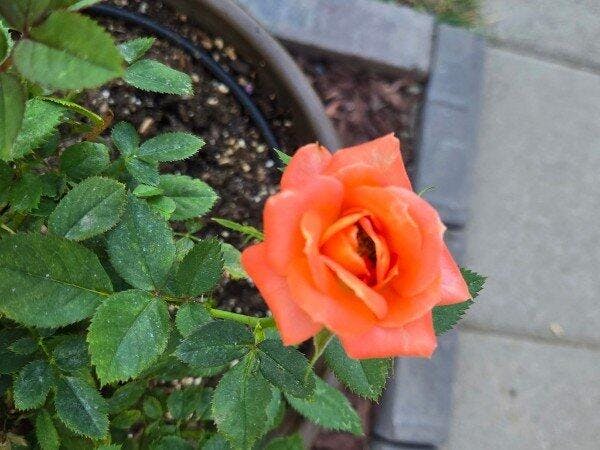
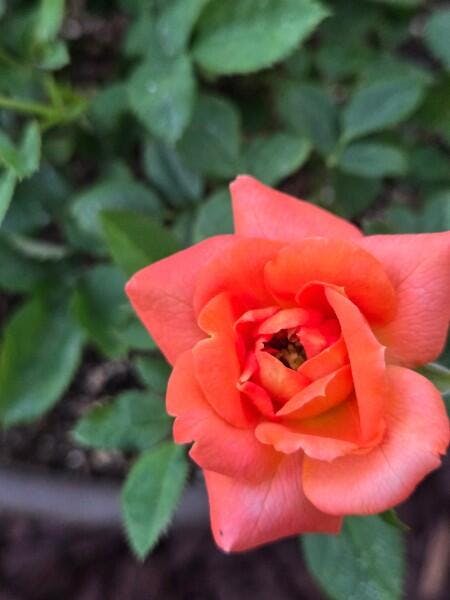
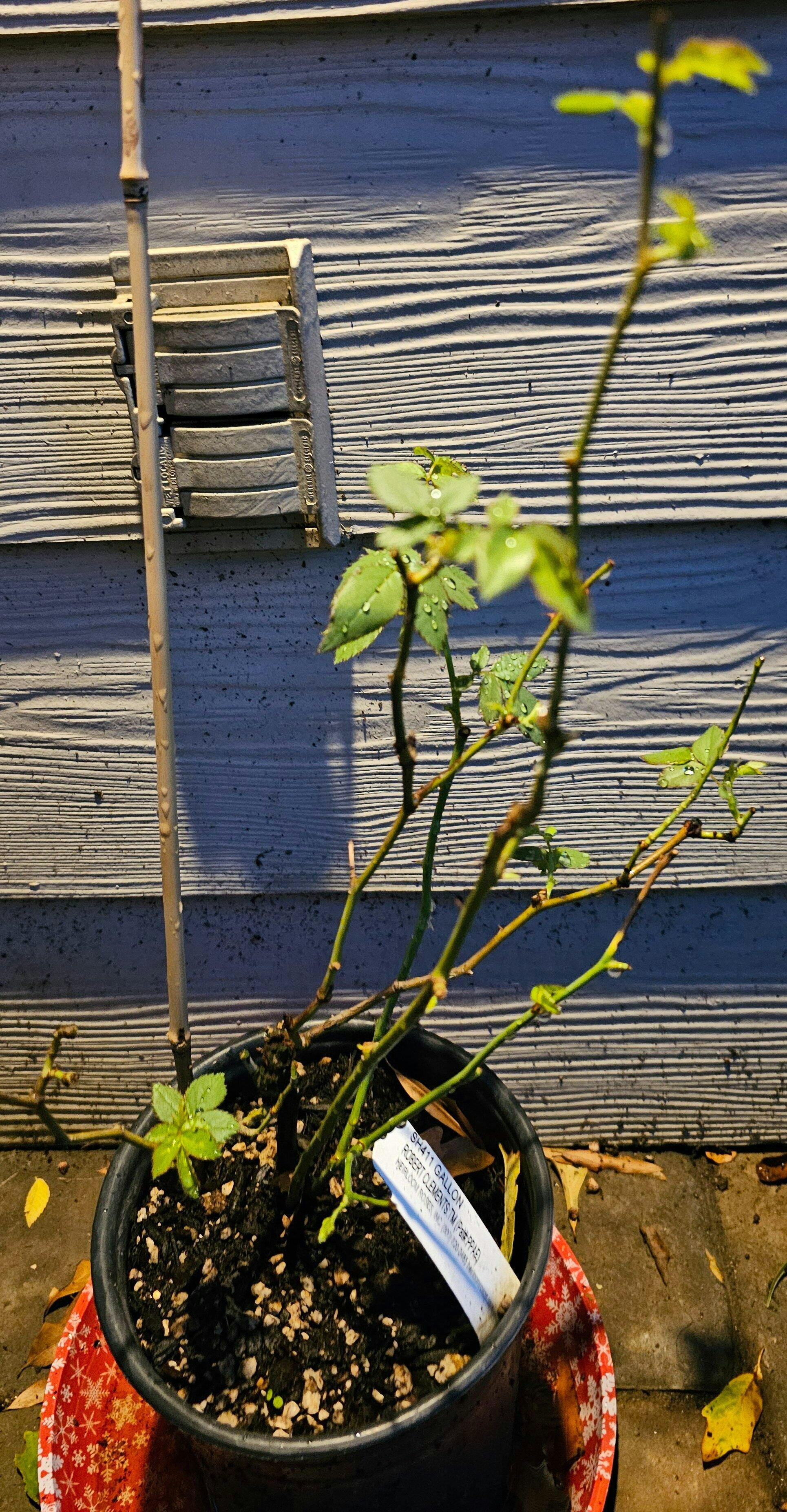
Sunblaze® Amber Rose
Perennial
- Bright, bold rose adds a splash of color to containers & garden beds!
- Sun-loving, disease-resistant blooms spring through fall.
- Grown on its own roots - not grafted. No special protection or fussing required.
- Zones 5-11, sun, 24" tall x 24" wide at maturity.
 ZONE
ZONE
 EXPOSURE
 HEIGHT


Description
Sunblaze® Roses are a stunning collection of miniature roses renowned for their vibrant colors and remarkable sun tolerance. These hardy and easy-to-grow varieties thrive in full sun, blooming from spring until fall. Their compact size makes them ideal for containers, window boxes, and garden beds, adding a splash of color to any outdoor space.
Details
Patent #: PP 20,779
Common name: Rose
Zone: 5-11
Sun exposure: Full sun (> 6 hours sun)
Height x width: 24" x 24"
Flower color:Orange
Foliage color: Green
Season of interest: Summer-fall
Bloom time: Summer, fall
Features: Space savers, heat tolerant, container plants, low maintenance, cut flower, fragrant, pollinator-friendly
Uses: Accent, border, container gardening, cottage gardening, herb gardens, rock gardens, ornamental, specimen
How to Grow
Light: Sun (> 6 hours sun). This encourages the best flower production while also aiding in disease resistance.
Water: For best results, roses should get about an inch of water each week, through rainfall or irrigation. This can be difficult to gauge, but if you avoid keeping plants too wet or too dry, they'll be fine. When watering roses, whether by hand or with an irrigation system, avoid wetting the foliage, which encourages leaf spot diseases and powdery mildew.
Spacing: 3 feet, minimum
Fertilizing: Roses benefit from high levels of nutrients, increasing flowering as a result. We recommend a granular rose fertilizer applied in early spring, just as the ground begins to thaw. If you wish, you can make additional applications in late spring and early summer, but do not fertilize after mid/late July.
Winterizing: In both warm and cold climates, a 2-3" layer of mulch is recommended year-round, especially in winter. In cold climates, wait until spring to prune; warmer areas may prune in autumn if desired.
Maintenance & pruning: We do recommend yearly pruning of roses, as this encourages thick, vigorous growth and the best flower coverage. Aim to cut back to just above a large, vigorous bud. The bigger the bud you cut back to, the thicker and more vigorous the growth will be. Remove any spindly stems entirely. If roses show signs of leaf spot, remove affected portions. Most roses we offer do not require deadheading, but you may do so if you wish.
Plant spacing is based on the ultimate width of the plants. This figure is normally given as a range; for example, 3-5’. If you live in a cold climate and/or want plants to fill in more quickly, plan to space at the shorter end of the range. If you live in a warm climate, are on a limited budget, or are willing to wait longer for plants to touch, use the higher end of the range. Using the larger number is recommended when calculating distance from a building or structure. There’s really no such thing as "maximum spacing": if you don’t want your plants to touch, you can space them as far apart as you’d like. All plant spacing is calculated on center, or in other words, the centers of the plants are spaced one half of their eventual width apart:

Unless you are planting in a straight line, as you might for hedges or edging, space your plants in a staggered or zig-zag pattern for a more interesting and naturalistic look:

Not sure just how many plants will fit in your garden? Our calculator gives you the exact amount of plants required for your space. Simply update the values and the calculator will re-calculate accordingly. Spacing information can be found in the 'How to Grow' tab on each plant's page.