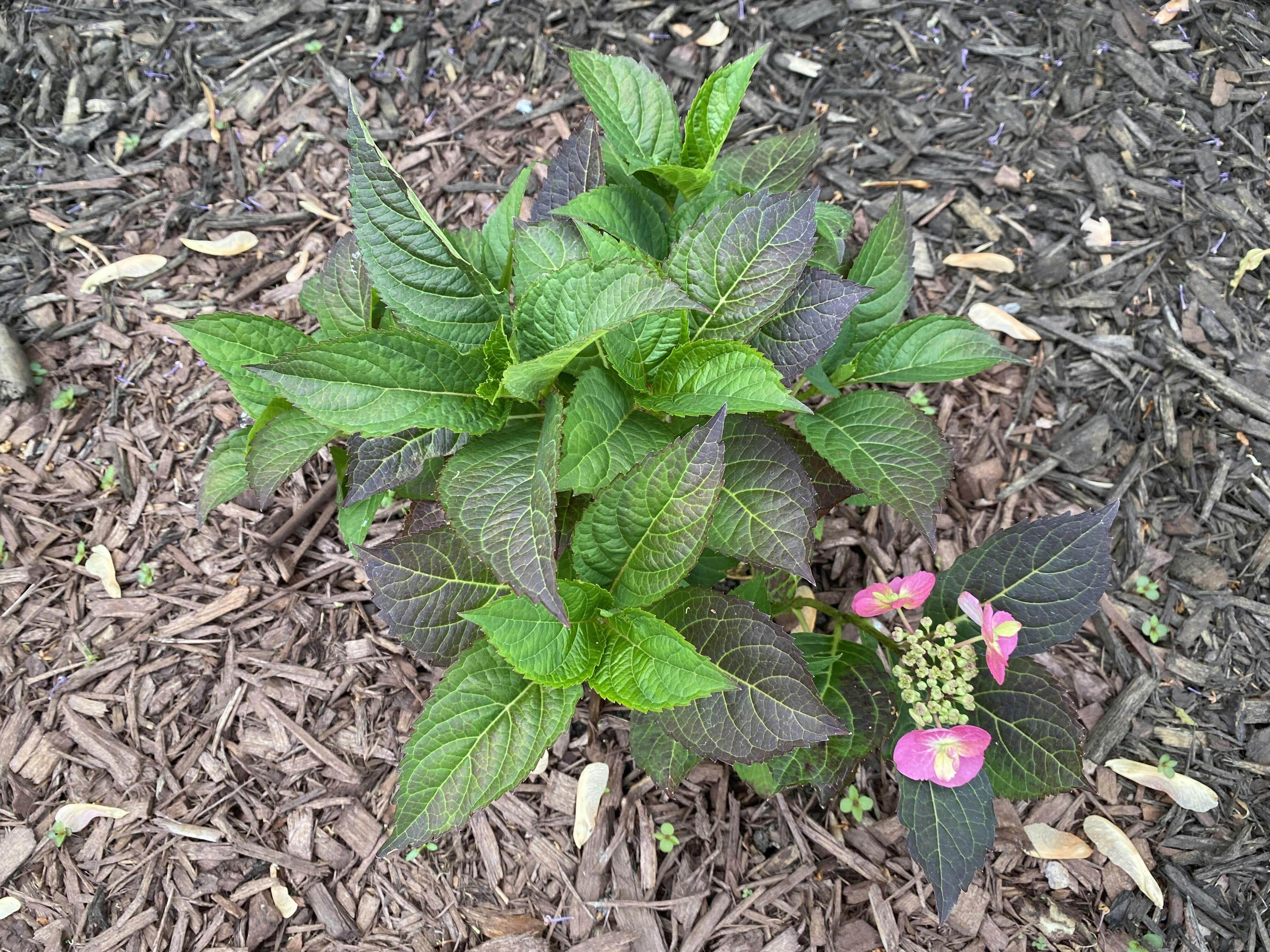
Tuff Stuff™ Mountain Hydrangea
Shrub
-
We no longer offer this product. For a similar look check out our Tuff Stuff Top Fun Hydrangea!
- Compact habit won't outgrow its space.
- Low maintenance! No pruning needed.
- Glossy foliage looks great all season.
- Zones 5-9, sun/part sun, 3′ tall x 3' wide at maturity.
 ZONE
ZONE
 EXPOSURE
 HEIGHT


Description
Details
Patent #: USPP 24,820
Common name: Reblooming hydrangea, Mountain hydrangea
Zone: 5-9
Sun exposure: Sun (6+ hours sun) in cool areas; part-sun (4-6 hours sun) in warm climates.
Height x width: 2-3' tall and wide
Flower color: Pink or purple, depending on conditions
Foliage color: Glossy green
Season of Interest: Summer-fall
Bloom time: Summer, fall
Features: Space savers, Proven Winners, heat tolerant, container plants, best for beginners
Uses: Flower gardens, landscaping, specimen, flowering hedge
How to Grow
Light: Plants can take full sun (6+ hrs/day) in cooler areas, but afternoon shade is recommended in warm climates. If your plant frequently wilts in the afternoon even though it was recently watered, that may indicate the spot is too sunny for it.
Water: Average to abundant (as long as soil is well drained).
Space: min. 3' apart
Fertilizing: Fertilize in early spring, once the ground has thawed, with a granular rose fertilizer. Make an additional application in late spring/early summer to boost reblooming ability, particularly in colder areas.
Winterizing: Do not cut plants back for winter! Doing so will cut off all of the flower buds for the following season. If plants show a lot of dieback in spring, consider moving them, as this indicates the spot may be too cold for the plant.
Maintenance & Pruning: Even though Tuff Stuff hydrangeas are reblooming and capable of flowering on old and new wood, for best bloom, it is best to avoid pruning, trimming, or cutting them back. Any dead wood can be pruned out in early spring, once the new growth has begun to emerge and its clear where any winter damage occurred. If plants do not flower reliably, move them to a more protected spot in your yard; early spring is an excellent time to do that. For best reblooming performance, keep plants free of stress so they grow vigorously. New growth is key to a good rebloom!
Notes on flower color: The flowers of bigleaf hydrangeas can vary from pink to purple to blue, depending on soil chemistry. You must have both an acidic soil and the presence of aluminum (a naturally occurring soil element) in order for blue/purple color to develop. Get a soil test from your local Cooperative Extension before applying any color change treatment to be certain that it will be effective.

Plant spacing is based on the ultimate width of the plants. This figure is normally given as a range; for example, 3-5’. If you live in a cold climate and/or want plants to fill in more quickly, plan to space at the shorter end of the range. If you live in a warm climate, are on a limited budget, or are willing to wait longer for plants to touch, use the higher end of the range. Using the larger number is recommended when calculating distance from a building or structure. There’s really no such thing as "maximum spacing": if you don’t want your plants to touch, you can space them as far apart as you’d like. All plant spacing is calculated on center, or in other words, the centers of the plants are spaced one half of their eventual width apart:

Unless you are planting in a straight line, as you might for hedges or edging, space your plants in a staggered or zig-zag pattern for a more interesting and naturalistic look:

Not sure just how many plants will fit in your garden? Our calculator gives you the exact amount of plants required for your space. Simply update the values and the calculator will re-calculate accordingly. Spacing information can be found in the 'How to Grow' tab on each plant's page.