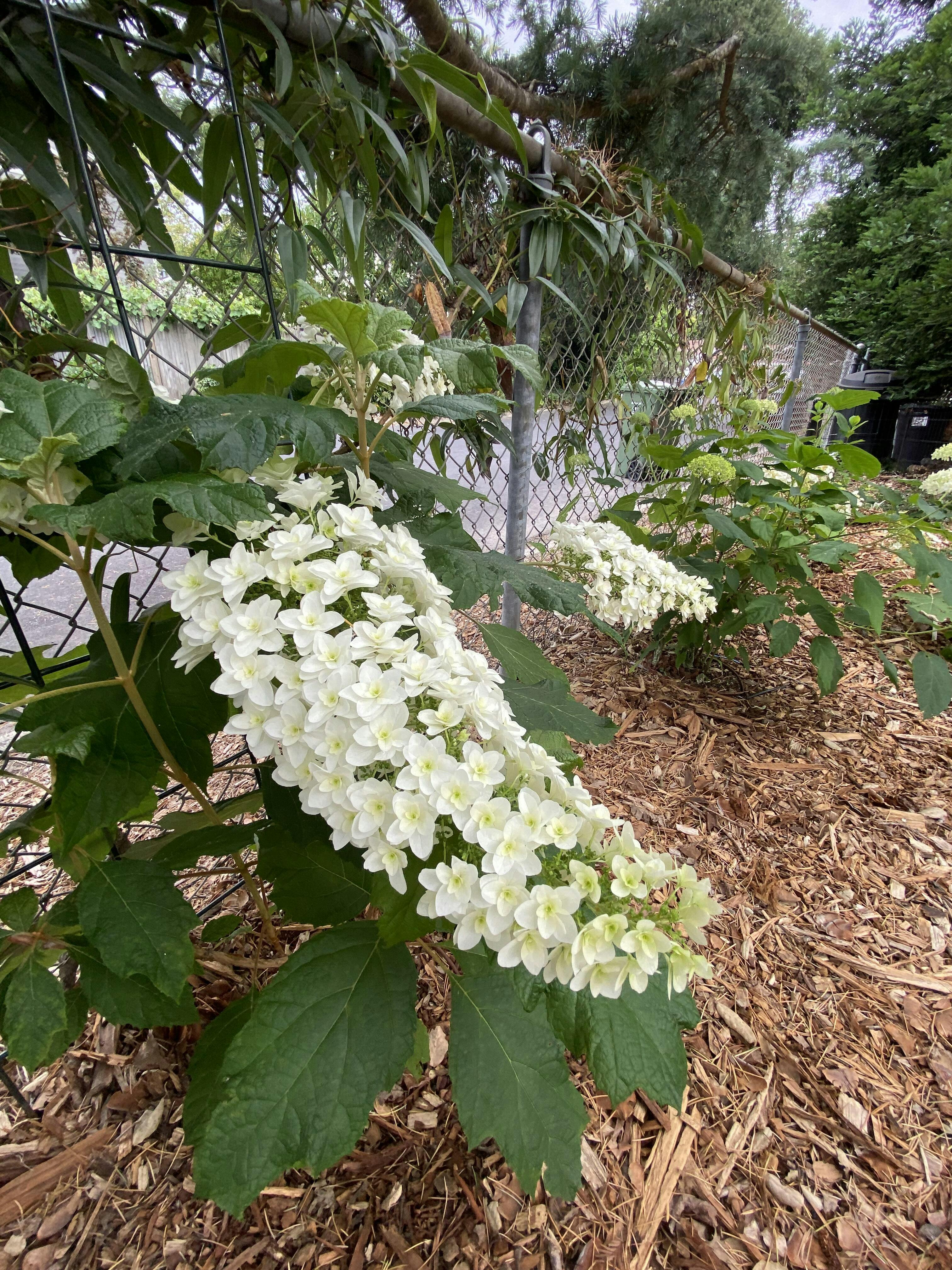
Gatsby Star® Oakleaf Hydrangea
Shrub
- We no longer offer this product! For a similar look check out Gatsby Gal Hydrangea!
- Huge clusters of star-shaped double flowers.
- Fragrant blooms attract pollinators all season long.
- Fall interest! Stunning red color and unique peeling bark.
- Low maintenance! No pruning needed.
- Zones 5-9, sun/part sun, 8' tall x 8' wide at maturity.
 ZONE
ZONE
 EXPOSURE
 HEIGHT


Description
Details
Patent #: USPP 25,412
Common name: Oakleaf hydrangea
Zone: 5-9
Sun exposure: Sun in cool areas; part shade in warm climates.
Height x width: 6-8' tall and wide
Flower color: White
Foliage color: Green, turning deep red-burgundy in autumn
Season of Interest: Summer-fall
Uses: Flower gardens, landscaping, specimen, flowering hedge, pollinator gardens, native plant gardens.
How to Grow
Light: Plants can take full sun (6+ hrs/day) in cooler areas, but afternoon shade is recommended in warm climates. Overall, oakleaf hydrangeas have the best performance in shade compared to other types of hydrangeas, but flowering and fall color are best in at least some sun.
Water: Average. Oakleaf hydrangeas do not tolerate overwatering or poor drainage.
Space: min. 6' apart
Fertilizing: If desired, fertilize in early spring, once the ground has thawed, with a granular rose fertilizer.
Winterizing: Oakleaf hydrangeas are very hardy and easily withstand harsh winters, so need no special care. A good 2-3" layer of mulch helps protect the shallow roots. Do not cut back or prune oakleaf hydrangeas (see below for more info).
Maintenance & Pruning: Oakleaf hydrangeas bloom on old wood; that means they have their flowers buds for the following season all through winter, so they cannot be cut back without removing flower buds. It is best to avoid pruning or trimming them altogether, though you may selectively remove branches to develop a nice shape and silhouette if desired.

Plant spacing is based on the ultimate width of the plants. This figure is normally given as a range; for example, 3-5’. If you live in a cold climate and/or want plants to fill in more quickly, plan to space at the shorter end of the range. If you live in a warm climate, are on a limited budget, or are willing to wait longer for plants to touch, use the higher end of the range. Using the larger number is recommended when calculating distance from a building or structure. There’s really no such thing as "maximum spacing": if you don’t want your plants to touch, you can space them as far apart as you’d like. All plant spacing is calculated on center, or in other words, the centers of the plants are spaced one half of their eventual width apart:

Unless you are planting in a straight line, as you might for hedges or edging, space your plants in a staggered or zig-zag pattern for a more interesting and naturalistic look:

Not sure just how many plants will fit in your garden? Our calculator gives you the exact amount of plants required for your space. Simply update the values and the calculator will re-calculate accordingly. Spacing information can be found in the 'How to Grow' tab on each plant's page.