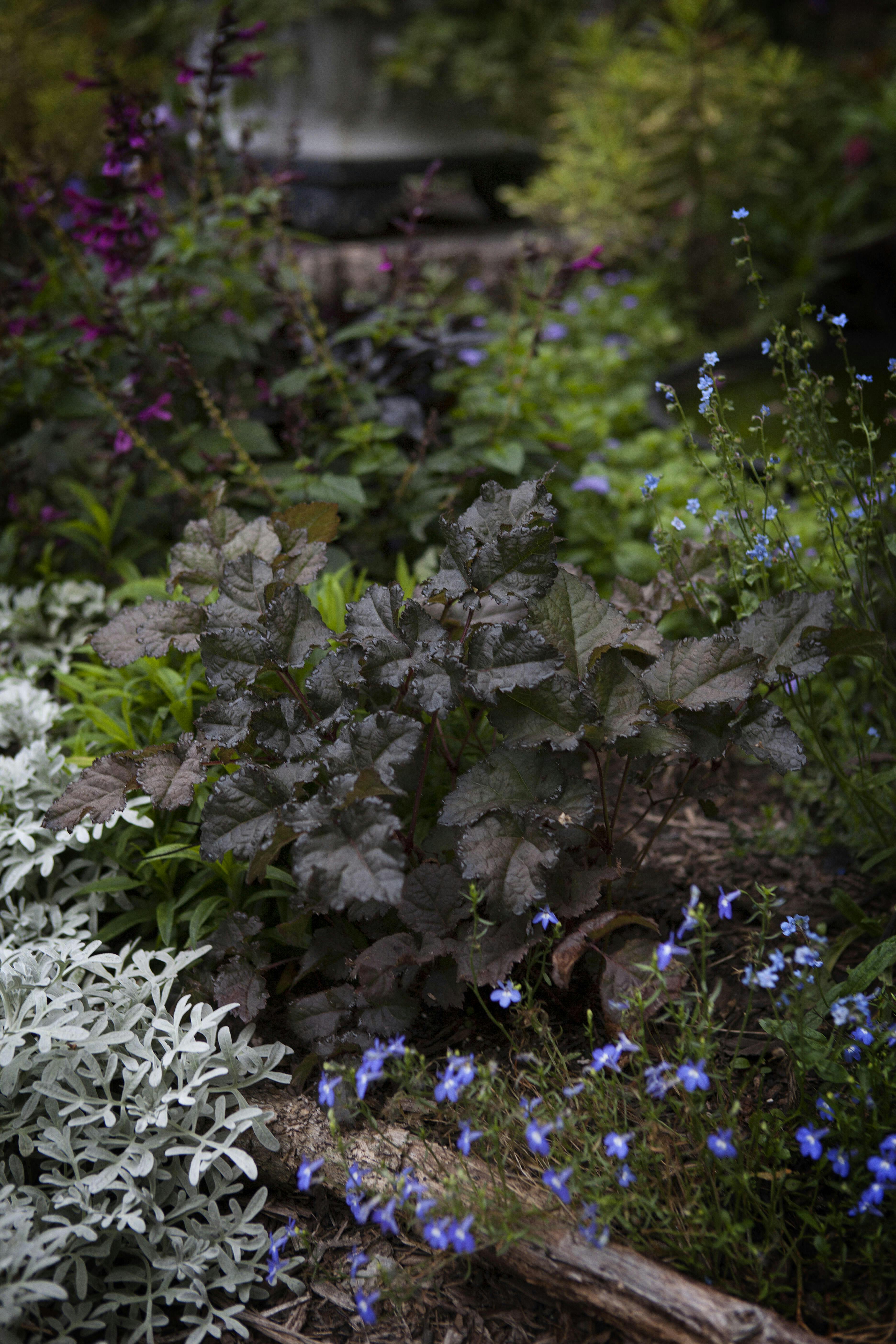
'Dark Side of the Moon' Astilbe
Perennial
- Named the 2026 Perennial of The Year!
- Near-black foliage creates a dark backdrop for bright flowers.
- Textured flower spikes bloom in late summer.
-
Low maintenance, performs well in sun, part sun, or shade!
- Zones 4-9, sun/part sun/shade, 22" tall x 28" wide at maturity.
 ZONE
ZONE
 EXPOSURE
 HEIGHT


Description
Details
Patent #: USPP 35461
Common name: False spirea, astilbe
Zone: 4 – 9
Sun exposure: Sun (> 6 hours sun) , part-sun (4-6 hours sun)
Height x width: 20-22″ x 24-28″
Flower color: Purple
Foliage color: Near black
Season of interest: Spring to fall
Bloom time: Late Summer
Features: Rare & unusual, deer & rabbit resistant, Proven Winners, heat tolerant, ground covers
Uses: Accent, border, container gardening, cottage gardening, edging, ground cover, massing, naturalizing, rain garden, underplanting, waterside, woodland
How to Grow
Light: Part-sun (4-6 hours sun) to shade (< 4 hours sun)
Water: Likes soil consistently moist. Adding mulch can help retain soil moisture.
Spacing: 18-24 inches
Fertilizing: Astilbe is a heavy feeder that requires lots of nutrients. Fertilize early in the spring to produce healthy flowers with a 5-10-5 fertilizer blend. After it has bloomed, apply an additional handful of fertilizer around the plant’s base.
Winterizing: No specific care is needed. Foliage dies back in winter and can be cleared away in early spring before the plant sends up new shoots.
Maintenance & pruning: No deadheading is required unless you don’t like the appearance of spent blooms. If left on, they provide winter interest to the garden. Divide the roots of the plant in early spring or late fall when the plant is dormant.

Plant spacing is based on the ultimate width of the plants. This figure is normally given as a range; for example, 3-5’. If you live in a cold climate and/or want plants to fill in more quickly, plan to space at the shorter end of the range. If you live in a warm climate, are on a limited budget, or are willing to wait longer for plants to touch, use the higher end of the range. Using the larger number is recommended when calculating distance from a building or structure. There’s really no such thing as "maximum spacing": if you don’t want your plants to touch, you can space them as far apart as you’d like. All plant spacing is calculated on center, or in other words, the centers of the plants are spaced one half of their eventual width apart:

Unless you are planting in a straight line, as you might for hedges or edging, space your plants in a staggered or zig-zag pattern for a more interesting and naturalistic look:

Not sure just how many plants will fit in your garden? Our calculator gives you the exact amount of plants required for your space. Simply update the values and the calculator will re-calculate accordingly. Spacing information can be found in the 'How to Grow' tab on each plant's page.