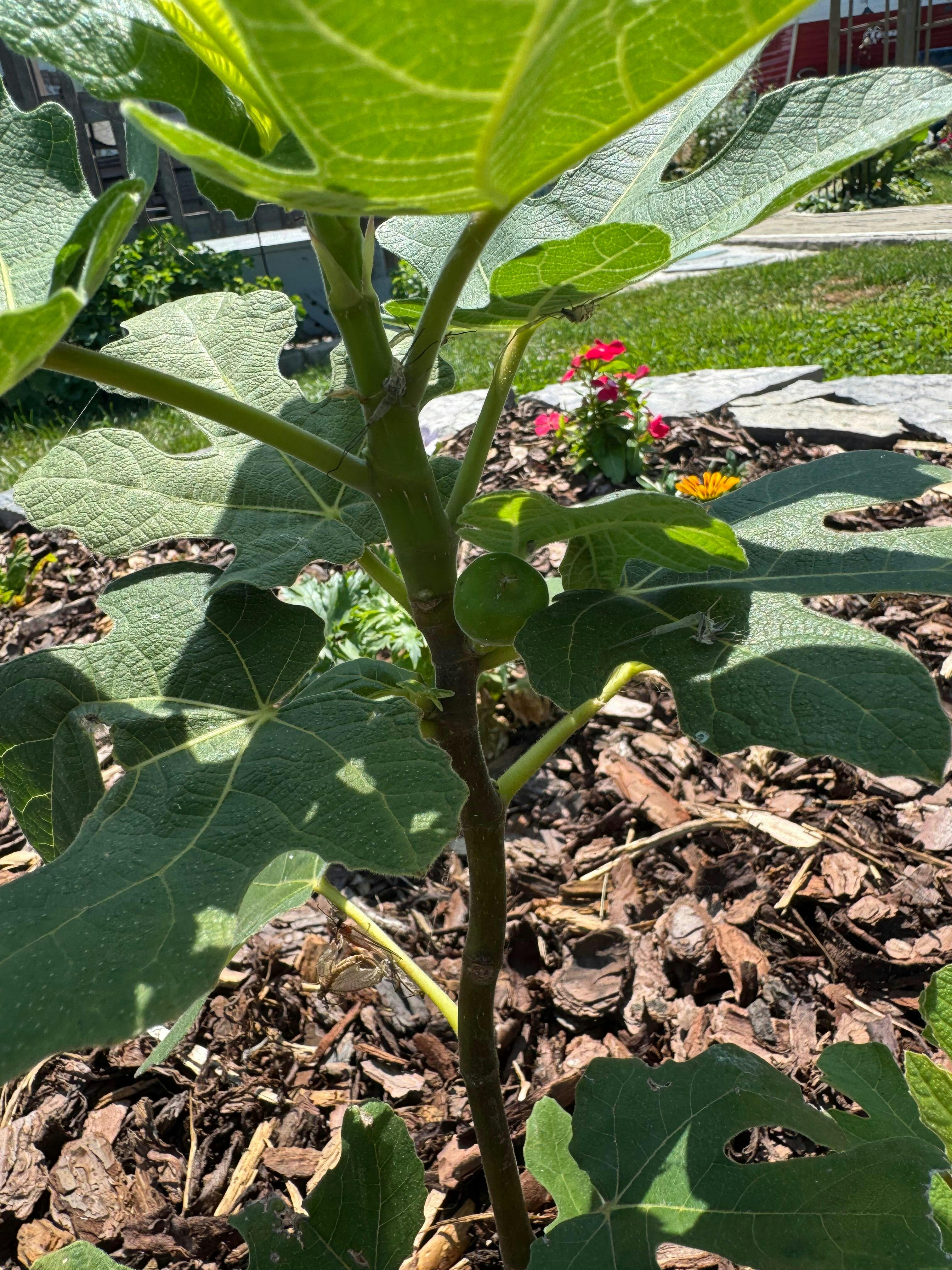
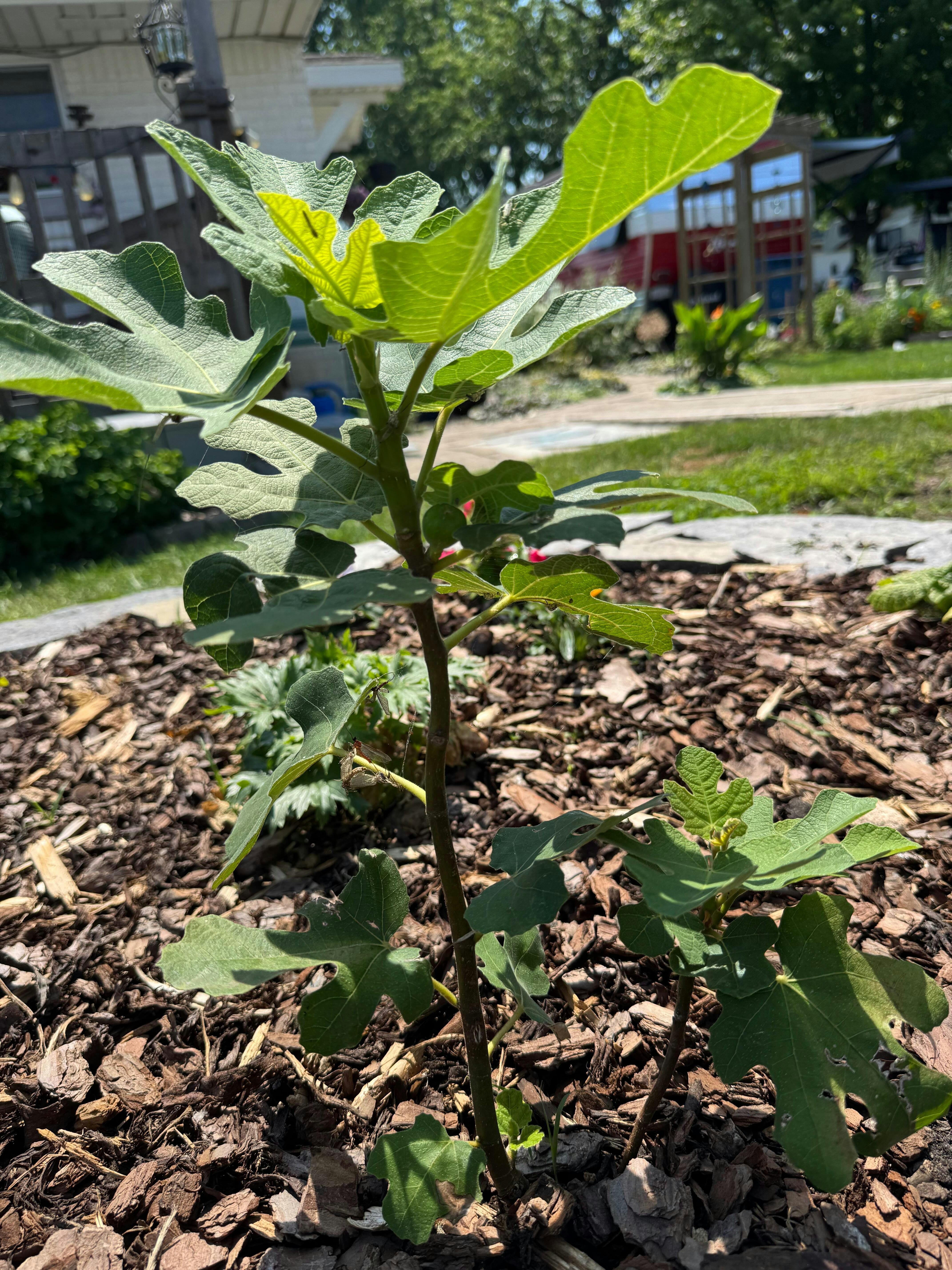
'Chicago Hardy' Fig (Ficus)
Shrub
- Easy-to-grow edible.
- Most cold-resistant fig on market.
- Unbothered by pests.
- Savory when fresh; sweeter when dried.
- Zones 5-9, sun, 20' tall x 22' wide at maturity.
UNABLE TO SHIP TO: CANADA
 ZONE
ZONE
 EXPOSURE
 HEIGHT


Description
Details
Common name: Fig
Zone: 5-9
Sun exposure: Full sun (6+ hours sun).
Height x width: 10-20 ft x 12-22 ft
Flower color: Brown fruits
Foliage color: Green
Season of interest: Summer
Bloom time: Summer
Features: Heat tolerant, deer resistant, best for beginners
Uses: Best in a vegetable garden.
How to Grow
Light: Full sun (6+ hrs/day). We highly recommend planting in a warm, protected spot in cold climates where the plants will be sheltered from blasts of cold air. Against a south-facing brick wall is ideal.
Water: Average.
Space: Plant 10-20 ft apart
Fertilizing: High fertility is recommended for best crop, especially in cold climates. Apply a granular garden or rose fertilizer in early spring, then again in late spring and in early summer. Tomato fertilizer is a good alternative.
Winterizing & Maintenance: Mulch at least 3" deep in cold climates. May die back to the ground in cold areas but will regrow from the roots. A long, warm season will produce the best fruit; harvest before a frost hits if necessary. Be sure to plant in an area with protection for best results in zone 5.
Plant spacing is based on the ultimate width of the plants. This figure is normally given as a range; for example, 3-5’. If you live in a cold climate and/or want plants to fill in more quickly, plan to space at the shorter end of the range. If you live in a warm climate, are on a limited budget, or are willing to wait longer for plants to touch, use the higher end of the range. Using the larger number is recommended when calculating distance from a building or structure. There’s really no such thing as "maximum spacing": if you don’t want your plants to touch, you can space them as far apart as you’d like. All plant spacing is calculated on center, or in other words, the centers of the plants are spaced one half of their eventual width apart:

Unless you are planting in a straight line, as you might for hedges or edging, space your plants in a staggered or zig-zag pattern for a more interesting and naturalistic look:

Not sure just how many plants will fit in your garden? Our calculator gives you the exact amount of plants required for your space. Simply update the values and the calculator will re-calculate accordingly. Spacing information can be found in the 'How to Grow' tab on each plant's page.