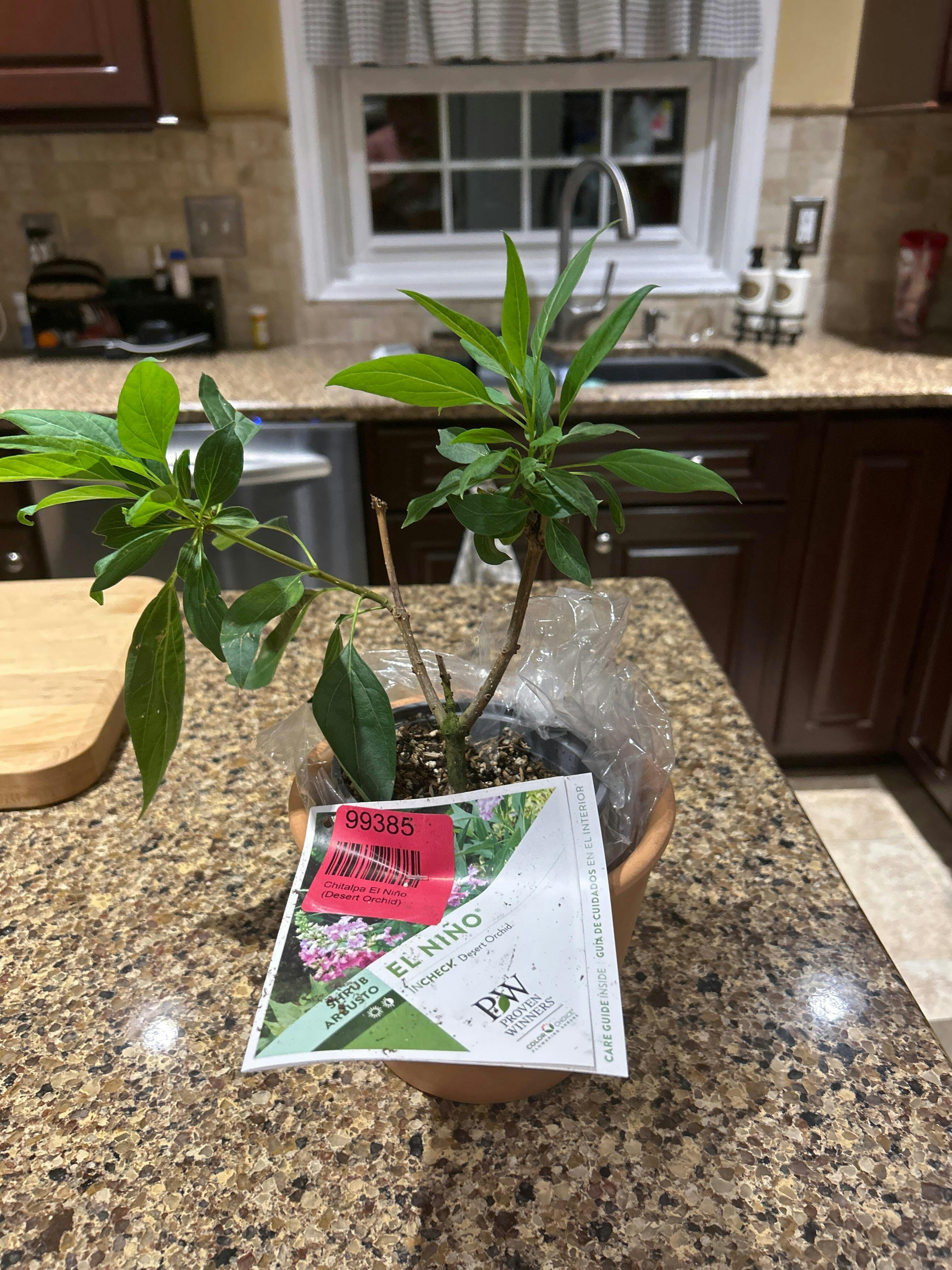
El Niño® Chitalpa
Shrub
- A truly unique option for your garden or landscape.
- Intricate pink/purple flowers resemble orchids!
- Flowers emit a delicious vanilla-melon fragrance.
- Vigorous, heat-tolerant & deer-resistant.
- Zones 6-9, sun to part sun, 10-15' tall x 8-10' wide at maturity.
 ZONE
ZONE
 EXPOSURE
 HEIGHT


Description
If you’ve never heard of Chitalpa before, you’re not alone! This is a new hybrid of two North American native trees: Chilopsis, also known as desert willow, and Catalpa, also known as cigar tree, Indian bean tree, or Catawba. These two species combine to create a heat tolerant, disease resistant shrub with the color and fragrance of the desert willow and the hardiness of the cigar tree. You already know we’re big fans of Proven Winners ColorChoice Shrubs around here, and this is one of the coolest and most original introductions we’ve ever seen from them.
Details
Patent #: PPAF
Common name: Desert orchid, chitalpa (pronounced chih-tal-pa)
Zone: 6-9
Sun exposure: Sun (6+ hours sun), part sun (4-6 hrs sun)
Height x width: 10-15’ x 8-10'
Flower color: Pink-purple, with bits of yellow
Foliage color: Green
Bloom season: Summer-fall
Bloom time: Summer
Features: Rare & unusual, Proven Winners, heat tolerant, dry soils, drought tolerant, deer resistant, best sellers, best for beginners
Uses: Background, border, foundation planting, hedge, ornamental, privacy, specimen
How to Grow
Light: Can grow in full to part sun; the hotter your climate, the more shade it can take. Full sun recommended in USDA zone 6.
Water: Low to average
Space: Min. 4' apart; further in more mild climates
Fertilizing: Fertilize in early spring, once the ground has thawed, with a granular rose fertilizer.
Winterizing: No special treatment is required in warmer areas; 2-3" of mulch is recommended in cooler climates. May die back to the ground in harsh winters in zone 6 but will regrow from the ground – give it plenty of time to re-emerge if this happens. Additional applications of fertilizer may help it recover more quickly once new growth begins to emerge.
Maintenance & Pruning: Little to no pruning required, but may be trimmed to take on the shape of a small tree if you wish. If the plant experiences winter dieback, wait until new growth begins to remove any dead or old wood.

Plant spacing is based on the ultimate width of the plants. This figure is normally given as a range; for example, 3-5’. If you live in a cold climate and/or want plants to fill in more quickly, plan to space at the shorter end of the range. If you live in a warm climate, are on a limited budget, or are willing to wait longer for plants to touch, use the higher end of the range. Using the larger number is recommended when calculating distance from a building or structure. There’s really no such thing as "maximum spacing": if you don’t want your plants to touch, you can space them as far apart as you’d like. All plant spacing is calculated on center, or in other words, the centers of the plants are spaced one half of their eventual width apart:

Unless you are planting in a straight line, as you might for hedges or edging, space your plants in a staggered or zig-zag pattern for a more interesting and naturalistic look:

Not sure just how many plants will fit in your garden? Our calculator gives you the exact amount of plants required for your space. Simply update the values and the calculator will re-calculate accordingly. Spacing information can be found in the 'How to Grow' tab on each plant's page.