Javelin Forte™ Deep Rose Spanish Lavender (Lavandula)
Perennial
- Pink flowers bloom from late spring through early fall!
- Heat and drought tolerant.
- Powerful perennial for pollinators.
- Zones 7-9, sun, 20" tall and 18" wide at maturity.
 ZONE
ZONE
 EXPOSURE
 HEIGHT


Description
What makes Spanish lavender (or Lavandula stoechas) so unique? The flowers have a distinct shape, with brightly colored petals emerging at the very top of the flower spikes. It's often referred to as "butterfly lavender" for these showy petals and their ability to attract pollinators. It grows as an evergreen shrub in warmer zones and can even be trained into tree form, but colder zones (down to zone 7!) can enjoy it as a perennial.
Details
Plant Patent: USPP 27,399
Common name: Lavender
Zone: 7-9
Sun exposure: Sun (> 6 hours sun)
Height x width: 14-20" tall and 12-18" wide
Flower color: Deep pink
Foliage color: Silver-gray
Season of interest: Spring through fall
Bloom time: Summer
Features: Rare & unusual, rabbit & deer resistant, heat tolerant fragrant, dry soils, drought tolerant
Uses: Container gardening, cottage gardening, edging, ground cover, massing, ornamental, herb garden, pollinator garden.
How to Grow
Light: Sun (> 6 hours sun)
Water: Dry to average. Very tolerant of dry conditions once established.
Spacing: 18 - 24 inches
Fertilizing: Lavender needs little in the way of fertilizer. However, if your plants are severely set back by winter damage, you could apply some granular garden fertilizer in early spring to give it a boost in its recovery.
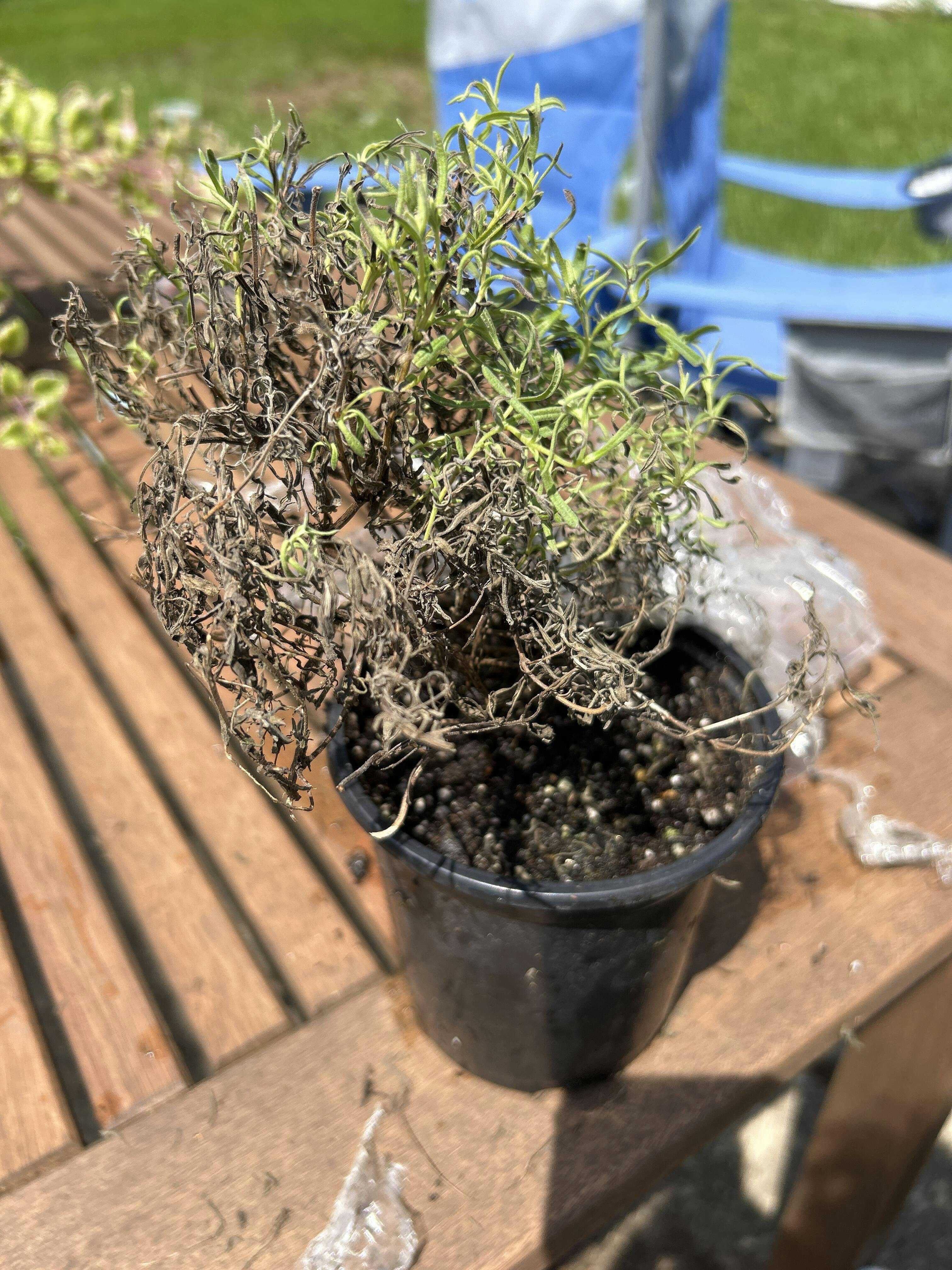
Winterizing: Plants may get some damage in winter, which can be exacerbated by wet soil conditions.
Maintenance & pruning: Remove faded flowers to promote continued bloom. Prune once or twice a year to keep plant shapely. Prune in the spring after the lavender wakes up. Wait until the lavender has new growth (do not worry if it takes a while to wake up).

Plant spacing is based on the ultimate width of the plants. This figure is normally given as a range; for example, 3-5’. If you live in a cold climate and/or want plants to fill in more quickly, plan to space at the shorter end of the range. If you live in a warm climate, are on a limited budget, or are willing to wait longer for plants to touch, use the higher end of the range. Using the larger number is recommended when calculating distance from a building or structure. There’s really no such thing as "maximum spacing": if you don’t want your plants to touch, you can space them as far apart as you’d like. All plant spacing is calculated on center, or in other words, the centers of the plants are spaced one half of their eventual width apart:

Unless you are planting in a straight line, as you might for hedges or edging, space your plants in a staggered or zig-zag pattern for a more interesting and naturalistic look:

Not sure just how many plants will fit in your garden? Our calculator gives you the exact amount of plants required for your space. Simply update the values and the calculator will re-calculate accordingly. Spacing information can be found in the 'How to Grow' tab on each plant's page.