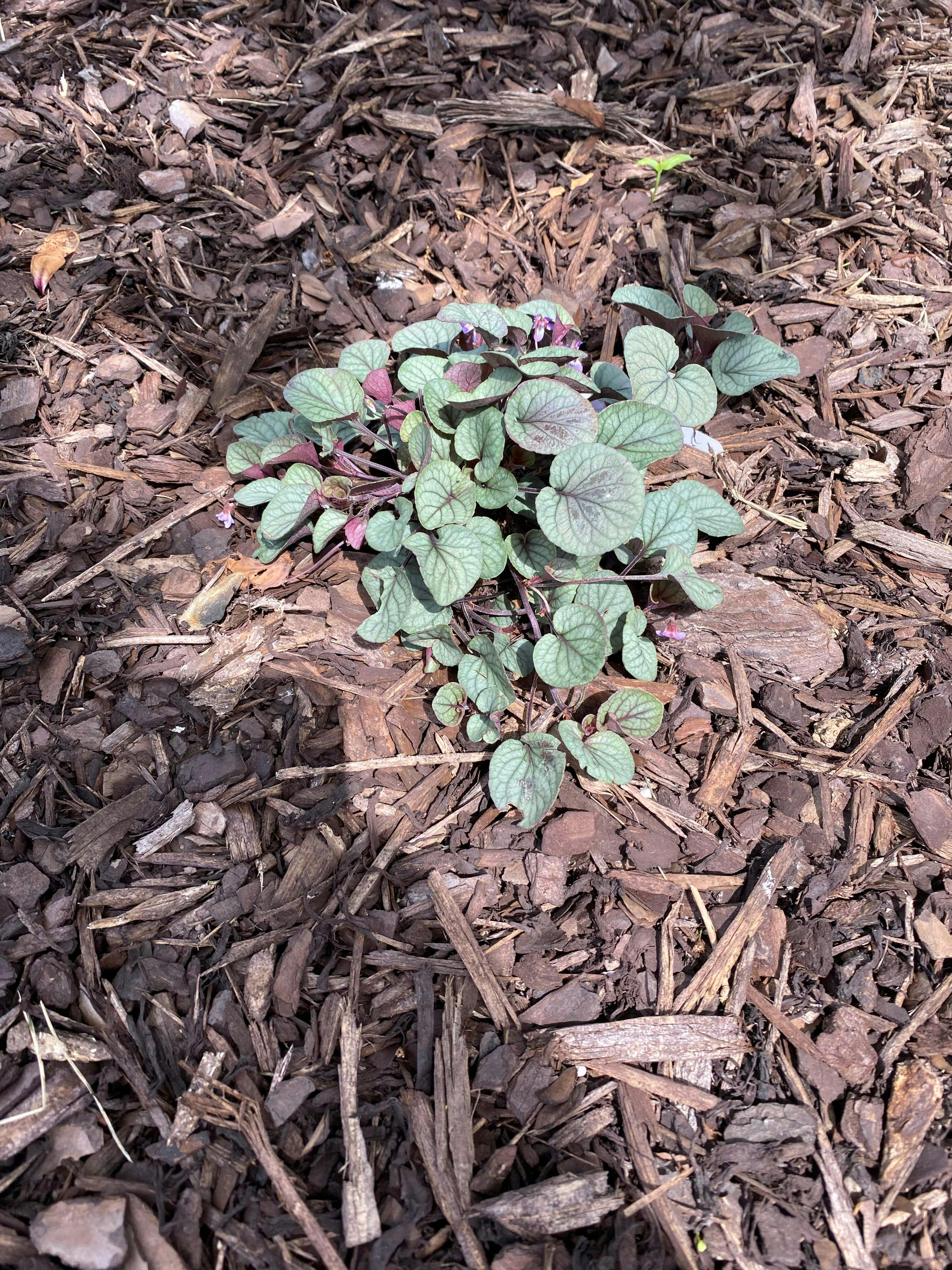
'Silver Gem' Violet (Viola)
Perennial
- Forms a dense mat of silver foliage & delicate purple flowers!
- Great flowering perennial ground cover option for shade gardens.
- The color & sweet fragrance are enticing to butterflies & other pollinators.
- Native, deer-resistant, & overall easy to grow.
- Zones 6-8, part sun/shade, up to 3-5” tall x 10-15” wide at maturity.
 ZONE
ZONE
 EXPOSURE
 HEIGHT


Description
Notably, it displays impressive drought tolerance once established, and its deer resistance makes it a valuable addition to gardens prone to grazing. The colors and sweet vanilla fragrance also entice butterflies and other pollinators!
Details
Common name: Viola
Zone: 6-8
Sun exposure: Part-sun (4-6 hours sun) to shade (< 4 hours sun)
Height x width: 3-5” tall x 10-15” wide
Flower color: Violet-blue
Foliage color: Silver, green
Season of interest: Spring to fall
Bloom time: Spring
Features: Native, deer-resistant, drought-tolerant, spring-blooming, fall-interest, long-blooming, low maintenance, pollinator-friendly, ground cover
Uses: Accent, alpine and rock, container gardening, cottage gardening, edging, ground cover, massing, naturalizing, rock garden, small spaces, underplanting, wildflower, woodland
How to Grow
Light: Part-sun (4-6 hours sun) to shade (< 4 hours sun)
Water: Water regularly until established. During dry spells, provide your plant with supplemental water, aiming for about 1 inch of water weekly, including rain.
Spacing: 10-15 inches
Fertilizing: The application of a slow-release, balanced fertilizer in spring should provide adequate feeding for the growing season.
Winterizing: Violas benefit from extra mulch in the winter, which should be raked back in the spring.
Maintenance & pruning: Remove frost-damaged flowers and old, faded flowers to reduce the chances of fungal blight diseases. Reblooms consistently if sheared back by half when blooming begins to decline.
Plant spacing is based on the ultimate width of the plants. This figure is normally given as a range; for example, 3-5’. If you live in a cold climate and/or want plants to fill in more quickly, plan to space at the shorter end of the range. If you live in a warm climate, are on a limited budget, or are willing to wait longer for plants to touch, use the higher end of the range. Using the larger number is recommended when calculating distance from a building or structure. There’s really no such thing as "maximum spacing": if you don’t want your plants to touch, you can space them as far apart as you’d like. All plant spacing is calculated on center, or in other words, the centers of the plants are spaced one half of their eventual width apart:

Unless you are planting in a straight line, as you might for hedges or edging, space your plants in a staggered or zig-zag pattern for a more interesting and naturalistic look:

Not sure just how many plants will fit in your garden? Our calculator gives you the exact amount of plants required for your space. Simply update the values and the calculator will re-calculate accordingly. Spacing information can be found in the 'How to Grow' tab on each plant's page.