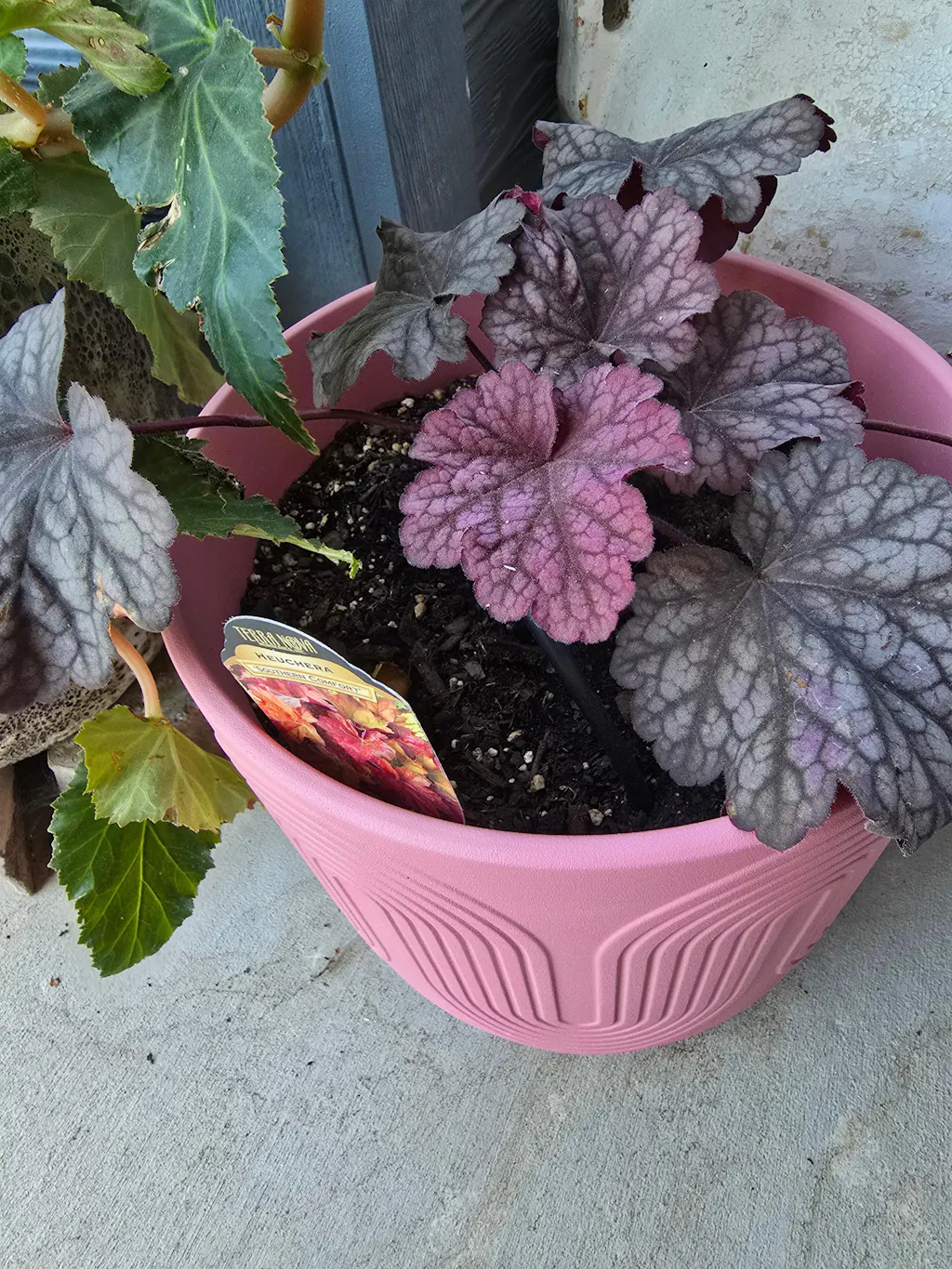
'Southern Comfort' Coral Bells (Heuchera)
Perennial
- Oversized, orange-hued leaves make a statement!
- Leaves reach up to 9 inches wide.
- Impressive color retention throughout the season.
- Thrives in the heat and humidity of the south.
- Zones 4-9, part sun/shade, 14″ tall x 24″ wide at maturity.
 ZONE
ZONE
 EXPOSURE
 HEIGHT


Description
Details
Patent #: USPP 20,364
Common name: Coral bells, heuchera, alumroot
Zone: 4 - 9
Sun exposure: Shade (< 4 hours sun) to part-sun (4-6 hours sun)
Height x width: 14" X 24"
Flower color: White
Foliage color: Amber to peachy bronze
Season of interest: Summer through fall
Bloom time: Late summer, early fall
Features: Winter interest, rabbit & deer resistant, native, heat tolerant, drought tolerant, cold tolerant
Uses: Accent, attracts pollinators, border, container gardening, edging, ground cover, massing, small spaces, underplanting, woodland
How to Grow
Light: As a general rule, Heucheras do well in the shade, but some morning sun will bring out more intense coloring. Too much light will cause the leaves to scorch.
Water: Keep the soil evenly moist but not consistently wet to prevent root rot. To reduce the risk of foliar disease, water Heuchera during the early morning so excess moisture can evaporate by evening.
Spacing: 1.5 ft
Fertilizing: Fertilizing is generally unnecessary unless the soil is nutrient depleted. Consider applying compost to provide nutrients and organic matter. Avoid any fertilization in fall and winter.
Winterizing: Winter mulching will prevent the freezing and thawing that can kill plant roots.
Maintenance & pruning: Cut back the entire flower stalk after flowering to put the plant's energy into growing more leaves. Divide coral bells every 3-5 years to keep them from dying out in the center.

Plant spacing is based on the ultimate width of the plants. This figure is normally given as a range; for example, 3-5’. If you live in a cold climate and/or want plants to fill in more quickly, plan to space at the shorter end of the range. If you live in a warm climate, are on a limited budget, or are willing to wait longer for plants to touch, use the higher end of the range. Using the larger number is recommended when calculating distance from a building or structure. There’s really no such thing as "maximum spacing": if you don’t want your plants to touch, you can space them as far apart as you’d like. All plant spacing is calculated on center, or in other words, the centers of the plants are spaced one half of their eventual width apart:

Unless you are planting in a straight line, as you might for hedges or edging, space your plants in a staggered or zig-zag pattern for a more interesting and naturalistic look:

Not sure just how many plants will fit in your garden? Our calculator gives you the exact amount of plants required for your space. Simply update the values and the calculator will re-calculate accordingly. Spacing information can be found in the 'How to Grow' tab on each plant's page.