Description
Plant spacing is based on the ultimate width of the plants. This figure is normally given as a range; for example, 3-5’. If you live in a cold climate and/or want plants to fill in more quickly, plan to space at the shorter end of the range. If you live in a warm climate, are on a limited budget, or are willing to wait longer for plants to touch, use the higher end of the range. Using the larger number is recommended when calculating distance from a building or structure. There’s really no such thing as "maximum spacing": if you don’t want your plants to touch, you can space them as far apart as you’d like. All plant spacing is calculated on center, or in other words, the centers of the plants are spaced one half of their eventual width apart:

Unless you are planting in a straight line, as you might for hedges or edging, space your plants in a staggered or zig-zag pattern for a more interesting and naturalistic look:

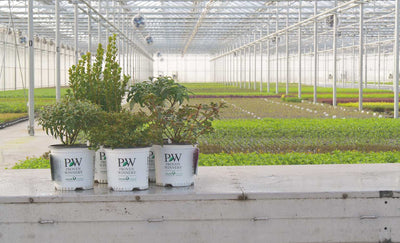
Hand-picked at our greenhouse
Shipped to your door
Arrives as young plant
Pollinators play a vital role in our ecosystems, gardens, and especially our food chain. Flowers produce pollen as a means of reproduction. While there are so many pollinator-friendly plants to choose from, here are seven of our favorites. You’ll love them, and the pollinators will too.
I had been watching these hollyhocks growing all summer and they were budded. A yard help person cut them down 🙁 . Are regrowing but I doubt if I will see flowers this year. Would like to buy more.
Packaged well and received quickly. The plant is doing well.
Can't wait to see it blossom. Love this company
I can’t really say much because flowers haven’t been produced yet but the plant is strong and growing well!!
Loved the idea of ordering these but the plants arrived in the mail and were just not good. Brown broken and very small. I had hoped they would flower this year but that definitely doesn’t look like that will happen. We planted and they died back a little more and have seemed to stabilize aka not getting any worst but haven’t seen any new growth. Hoping for the best.
We've got you covered with our 60-day guarantee. We guarantee that you will be satisfied with your purchase and that your plants will arrive healthy, free of pests and diseases, and true to name. Have a problem with your plant? We make it easy to place a claim via email, automated claim process, or use the chat bubble. Simply send us a photo of your plant, your order number, and a brief description of the problem within 60 days of receipt of your order. While we do not accept returns, we are happy to issue refunds. Refunds are based on the plant cost and do not include shipping charges. Allow up to 2 weeks for processing refunds. After 60 days, we cannot be responsible for the plants in your care and will not cover problems with overwintering, animals, insects, diseases, improper planting, drought, flooding, poor drainage, etc. Our goal is that you are successful with our plants (and gardening in general), so our expert staff is here to assist you with any problem you may experience. Any plant shipped dormant in spring is guaranteed to break dormancy, even if it takes longer than 60 days.